

Installing cooling systems in apartments and strata-managed properties involves more than selecting a unit and booking a technician. Unlike standalone homes, apartments operate within shared structures, body corporate rules, limited external access, and infrastructure constraints that can directly affect what type of system can legally and practically be installed. For property owners, investors, and strata committees, understanding these limitations is essential before approving any project.
For many apartment owners researching Air Conditioning Installations Perth, the first challenge is usually not the system itself, but whether the building can physically and legally accommodate it.
Why Apartment Installations Are More Complex Than Standard Residential Projects
Apartments and strata properties share walls, ceilings, rooftops, balconies, and often electrical systems. This means one installation can affect neighbouring residents, structural compliance, noise exposure, visual appearance, and common property rights.
Key complexity factors include:
Limited Outdoor Unit Placement
Split and multi-split systems require external condenser units, but apartments may restrict placement due to:
- Balcony space limitations
- Building façade appearance rules
- Shared rooftop restrictions
- Ventilation clearance requirements
- Noise proximity to neighbouring units
In many strata complexes, external walls and rooftops are classified as common property, meaning owners may need written approval before installation begins.
Strata Approval Requirements
Before arranging Air Conditioning Installations Perth, owners should review strata bylaws carefully. Common approval considerations include:
Structural Changes
Mounting brackets, wall penetrations, or roof access may require:
- Engineering approval
- Waterproofing compliance
- Building management authorisation
Noise Compliance
Many strata councils enforce strict decibel limits, particularly for condenser units near bedrooms or shared courtyards.
Visual Uniformity
Some apartment complexes regulate:
- Unit colour
- Placement visibility
- Pipe concealment
- Drainage routing
Failure to secure approval can result in forced removal or costly modifications.
Choosing the Right System for Apartments
Not every cooling solution suits strata properties equally.
Split Systems
Often ideal for:
- Single-bedroom apartments
- Smaller floorplans
- Living room-focused cooling
Multi-Split Systems
Better suited when:
- Multiple rooms need independent climate zones
- Outdoor unit numbers must be minimised
- Balcony or rooftop space is restricted
Ducted Systems
Less common in existing apartments due to:
- Ceiling cavity limitations
- Higher installation complexity
- Shared building design constraints
For buyers comparing options, selecting the right air conditioner Perth solution often depends on balancing cooling performance with building restrictions rather than simply choosing maximum capacity.
Shared Electrical Infrastructure Considerations
Older apartment buildings may have switchboards or supply systems that were not designed for multiple modern cooling units.
Potential concerns include:
Electrical Load Capacity
Installers may need to assess:
- Main board capacity
- Circuit allocation
- Metering arrangements
- Peak demand impacts
Cable Pathways
Running electrical cabling through common areas may require:
- Fire compliance
- Concealed trunking
- Shared service duct access
This is particularly important where multiple residents install systems over time, increasing cumulative electrical demand.
Condensation & Drainage Management
Drainage is one of the most overlooked installation issues in strata properties.
Poor condensate planning can lead to:
- Water dripping onto lower balconies
- Common area damage
- Mould risk
- Strata complaints
Proper drainage solutions may include:
- Gravity drainage
- Condensate pumps
- Approved discharge points
Apartment installations often require more precise drainage planning than detached homes.
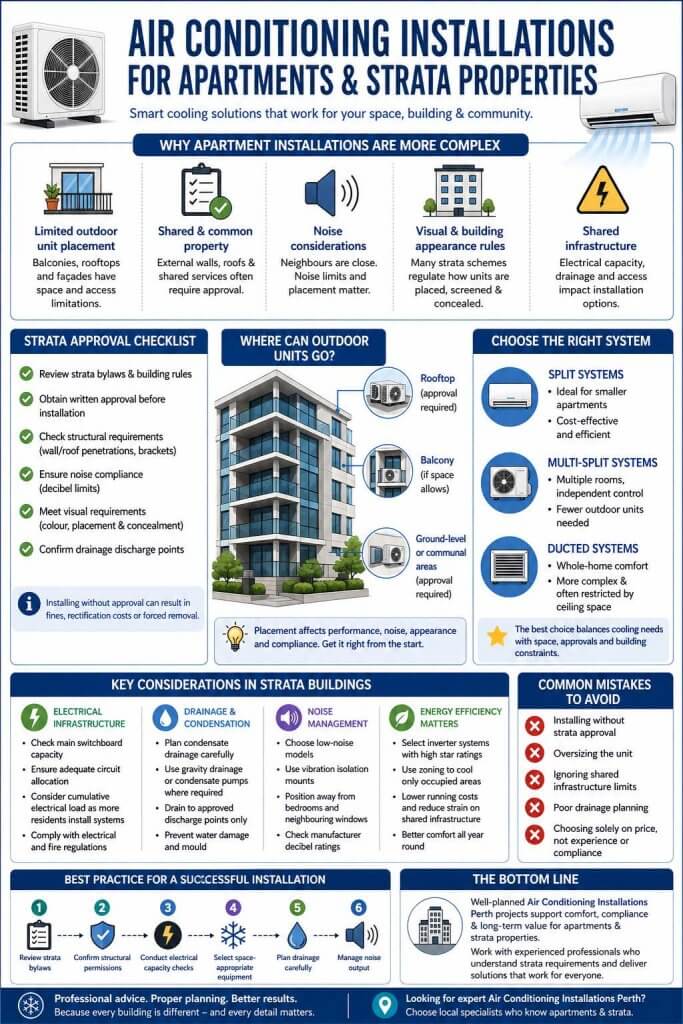
Noise Management in High-Density Living
In apartment environments, sound can become a compliance issue as much as a comfort issue.
Important factors:
- Outdoor unit vibration isolation
- Acoustic brackets
- Distance from neighbouring windows
- Manufacturer decibel ratings
A poorly placed condenser can quickly become a strata dispute, even if the system cools effectively.
Energy Efficiency in Shared Residential Buildings
Efficiency matters more in apartments because internal heat loads can vary based on:
- Sun-facing walls
- Shared ceilings
- Building insulation
- Glass exposure
Choosing inverter systems with zoning capability can reduce:
- Running costs
- Building heat strain
- Electrical overload risk
For many residents seeking an air conditioner Perth system, lower operating cost and quieter function often outweigh raw cooling power.
Common Mistakes Apartment Owners Make
Installing Without Approval
This can breach strata regulations.
Oversizing the Unit
Too much capacity may create humidity imbalance, short cycling, and excess energy use.
Ignoring Shared Infrastructure
Electrical or drainage limitations can delay projects significantly.
Prioritising Cheapest Quotes
Apartment projects often require specialised experience with strata compliance, not just standard installation.
Best Practice for Successful Apartment Installations
A compliant project usually involves:
- Reviewing strata bylaws
- Confirming structural permissions
- Conducting electrical capacity checks
- Selecting space-appropriate equipment
- Planning drainage carefully
- Managing noise output
Final Thoughts
Apartment and strata cooling projects demand technical planning that goes beyond standard residential installations. Space restrictions, approval pathways, shared infrastructure, and neighbour impact all influence system choice and project success. For property owners, body corporates, and investors, informed planning reduces compliance risks while improving comfort, asset value, and long-term reliability.
Whether upgrading a single apartment or planning broader building improvements, properly managed Air Conditioning Installations Perth projects can deliver practical cooling outcomes without compromising strata compliance or shared property performance.