
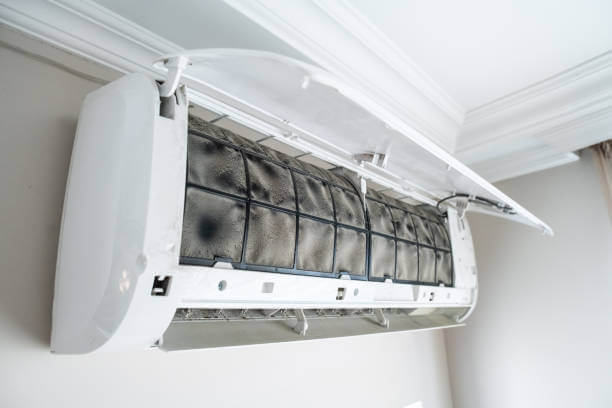
Condensation control is a core part of air conditioning performance, system protection, and building preservation. When cooling equipment operates, it removes heat from indoor air, but it also removes moisture. That moisture has to go somewhere. If condensate is not collected, directed, and discharged correctly, the result can be ceiling stains, wall damage, mould growth, insulation deterioration, electrical risk, and complaints about system reliability. For any property owner planning Air Conditioning Perth projects, drainage design should be treated as a technical requirement rather than a minor installation detail.
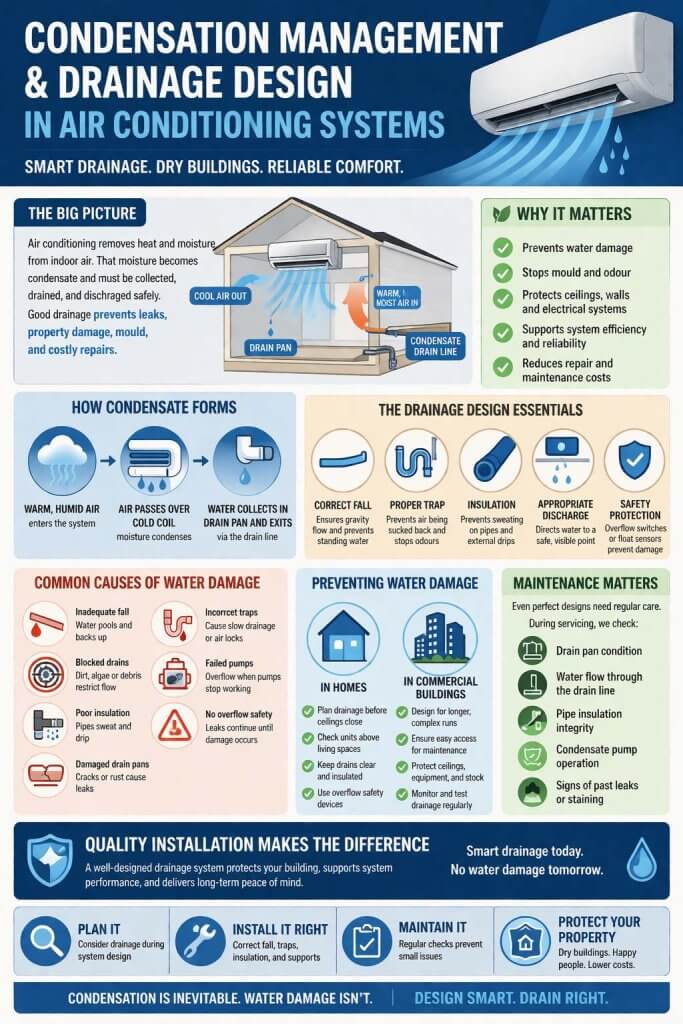
In practical terms, every cooling system is also a moisture management system. As warm indoor air passes over a cold evaporator coil, water vapour in the air condenses into liquid. That water is captured in the drain pan and transferred through a condensate drain line to an approved discharge point. The concept is simple, but the performance outcome depends heavily on design decisions made during installation. Pipe sizing, fall, trap configuration, connection point selection, insulation, access for maintenance, and overflow protection all influence whether the system manages moisture safely over time.
Why Condensation Management Matters
Many building owners focus on temperature control, energy efficiency, and equipment brand when choosing a new system. Those factors are important, but poorly managed condensate can undermine all of them. A well-performing unit can still cause expensive property damage if water discharge is not controlled. In residential settings, this may appear as swollen cornices, damp plasterboard, warped cabinetry, or damage around bulkheads. In commercial environments, water leaks can affect ceiling grids, lighting, stock, office fit-outs, data cabling, and occupied work areas.
Condensation also has an indoor environmental impact. Persistent moisture around drain pans, internal insulation, or concealed spaces can contribute to microbial growth. Once moisture problems become established, the issue is no longer limited to the air conditioning unit itself. It becomes a building maintenance issue involving repairs, remediation, tenant disruption, and in some cases insurance complications.
This is why drainage planning should never be left to on-site improvisation. It should be considered from the point of system selection and layout design, particularly where indoor units are located above finished ceilings, inside bulkheads, on upper floors, or in areas with limited service access.
How Condensate Forms in Air Conditioning Systems
Air conditioning systems reduce indoor humidity as part of the cooling cycle. When air contacts the cold surface of the evaporator coil, moisture condenses and drips into the drain tray. From there, the water must flow continuously through the drain line without backing up or escaping from the system.
The amount of condensate produced depends on several factors, including:
- indoor humidity levels
- system running time
- coil temperature
- airflow conditions
- occupancy loads
- outdoor weather conditions
- building ventilation characteristics
During humid conditions, a system may produce a substantial amount of water over the course of a day. That means the drainage arrangement must be capable of handling regular discharge, not just occasional drips. Undersized drains, poor fall, or blocked lines can quickly turn a routine moisture process into a leak event.
The Role of Proper Drainage Design
Good drainage design begins with understanding that condensate removal is a controlled plumbing function within the HVAC installation. The drain line must allow gravity flow where possible, maintain a continuous fall, avoid unnecessary restrictions, and terminate at a point that is suitable, visible where required, and compliant with site conditions.
Key design considerations include the route of the drain, the length of the run, the number of bends, the support of the pipework, and whether the system requires a trap. If the pipe is installed with inconsistent fall, water can pool inside the line. That standing water can collect debris, encourage biological growth, and create partial blockages. Over time, this can lead to tray overflow and internal leakage.
Trap design is also important. In certain systems, negative pressure around the fan coil can prevent proper drainage if a trap is not installed correctly. An incorrect trap can cause slow draining, air locking, or water retention. The result may be intermittent leakage that is difficult to diagnose because it appears only under certain load conditions.
Termination points also need thought. Discharging condensate in a location where water is not expected can create slip risks, staining, nuisance complaints, or hidden moisture accumulation. Discharge should not simply be placed wherever the pipe can reach most easily. It should be planned as part of the overall installation layout.
Common Causes of Water Damage from Air Conditioning Systems
Water damage linked to air conditioning is usually the result of one or more avoidable faults in design, installation, or maintenance. Common causes include:
Inadequate fall on drain lines
If the pipe does not slope correctly, condensate will not flow away consistently. Water can sit in the line and eventually back up into the unit.
Blocked condensate drains
Dust, biofilm, insulation debris, or insect activity can restrict drainage. Once the line is partially blocked, the drain pan can overflow.
Poorly insulated pipework
Cold pipe surfaces can sweat when exposed to humid air. This creates external dripping that may be mistaken for a drain fault. Proper insulation is needed to prevent secondary condensation on pipe surfaces.
Damaged or rusted drain pans
Older systems or poorly protected components may develop cracks or corrosion in the tray, allowing water to escape before it reaches the drain outlet.
Incorrect trap installation
An incorrectly designed trap can stop water movement or create unstable drainage behaviour.
Failed condensate pumps
Where gravity drainage is not possible, a condensate pump may be used. If the pump fails or is underspecified, overflow can occur quickly.
Lack of overflow safety controls
Without secondary protection such as float switches or overflow cut-outs, a drainage failure may continue until visible water damage has already occurred.
Why Drainage Planning Starts Before Installation
Drainage should be addressed during system design, not after the indoor unit location has already been fixed. This is especially important in custom homes, renovations, office fit-outs, and multi-room ducted layouts. Once ceilings are closed and finishes are complete, correcting a poor drain route becomes far more disruptive and expensive.
When assessing Air Conditioner Installations Perth, installers and property owners should consider:
- where the indoor unit will sit relative to the discharge point
- whether gravity drainage is possible
- whether ceiling space provides enough fall
- how maintenance access will be achieved
- whether secondary safety protection is needed
- how pipe insulation will be protected over time
- whether the termination point is appropriate for the building use
A good installation is not only about mounting the system neatly or achieving correct refrigerant performance. It also involves planning how the moisture removed from the air will be managed every day across the life of the unit.
Preventing Water Damage in Residential Properties
In homes, water damage from air conditioning often develops quietly. A slow leak above a ceiling can continue for weeks before becoming visible. By that stage, plasterboard may already be saturated, insulation may be compromised, and mould risk may have increased.
Residential risk areas include:
- ceiling-mounted ducted fan coil units
- wall split systems draining through long concealed runs
- upper-floor units above bedrooms or living spaces
- bulkhead installations near cabinetry
- roof space pipework exposed to high heat and dust
Prevention depends on correct initial design and regular inspection. Drain outlets should remain clear, insulation should stay intact, and tray drainage should be checked during servicing. Where practical, safety devices that shut the system down on overflow can prevent a minor drainage issue from becoming a building repair problem.
Preventing Water Damage in Commercial Buildings
Commercial properties face additional consequences because leakage can affect staff, customers, tenants, equipment, and business operations. Water discharge above suspended ceilings, comms rooms, retail floors, or stock areas can lead to disruption well beyond the cost of the HVAC repair itself.
Commercial systems also often involve longer drain runs, more complex ceiling spaces, and larger equipment loads. That means drainage design must account for serviceability, monitoring, and access. In some sites, a recurring overflow may indicate not just a blocked line, but a broader design issue involving multiple units, poor gradients, or inadequate discharge coordination.
For that reason, drainage should form part of the broader quality review during Air Conditioning Perth system planning, particularly in offices, shops, medical premises, schools, and mixed-use buildings.
Maintenance Still Matters After Good Design
Even a correctly designed system requires maintenance. Condensate lines are not fit-and-forget components. Over time, organic growth, dirt, and environmental debris can affect performance. Service inspections should include checking the drain tray, confirming flow through the drain line, inspecting insulation condition, and identifying signs of past overflow or moisture staining.
Where pumps are installed, they should be tested as part of routine servicing. Where access is limited, maintenance planning becomes even more important because early warning signs are easier to miss. If a system shows signs such as musty odours, intermittent dripping, staining, or unexpected shutdowns, condensate management should be assessed alongside the mechanical operation of the unit.
Why Installation Quality Makes the Difference
The difference between a reliable system and a problematic one is often found in the unseen parts of the installation. Refrigerant lines, electrical connections, supports, insulation, and drains all affect long-term performance. Drainage is one of the most important because failure can damage both the equipment environment and the surrounding building fabric.
That is why Air Conditioner Installations Perth should not be assessed only by cooling capacity or equipment price. The standard of condensate management, discharge planning, and moisture protection is just as important. A properly installed system should cool effectively while also removing moisture in a controlled, predictable, and safe way.
Final Thoughts
Condensation is a normal part of air conditioning operation, but water damage is not. With proper drainage planning, suitable pipework design, correct fall, effective insulation, and ongoing maintenance, condensate can be managed without risk to ceilings, walls, floors, or equipment. For property owners, builders, and facility managers, this is a reminder that air conditioning design is not just about airflow and temperature. It is also about controlling water before water controls the outcome.