
Noise control is a key part of air conditioning design, especially for homes, offices, apartment buildings, retail spaces & commercial properties in Perth. A system may cool or heat effectively, but poor placement, weak vibration control or non-compliant acoustic planning can create complaints, costly relocation work & regulatory issues.
Well-planned Air Conditioner Installations Perth should consider performance, airflow, access, drainage, electrical requirements & noise impact before the unit is fitted. In Western Australia, air conditioner noise must comply with the Environmental Protection (Noise) Regulations 1997, and WA guidance notes that residential equipment may be treated differently only when it is used reasonably and within specified conditions.
Why Noise Planning Matters
Air conditioners produce sound from fans, compressors, air movement, cabinet vibration & refrigerant operation. In many cases, the problem is not the unit itself, but where it is placed and how it is mounted.
For homeowners, poor noise planning can affect bedrooms, outdoor living areas & neighbouring properties. For commercial sites, noise can affect adjoining tenants, offices, hospitality areas or residential neighbours. The City of Perth states that air conditioning and ventilation equipment must comply with assigned noise levels, and that homeowners and installers are responsible for compliance.
For homeowners and commercial property managers searching for Air Conditioner Perth solutions, noise reduction should be addressed before installation, not after complaints occur.
1. Correct Outdoor Unit Placement
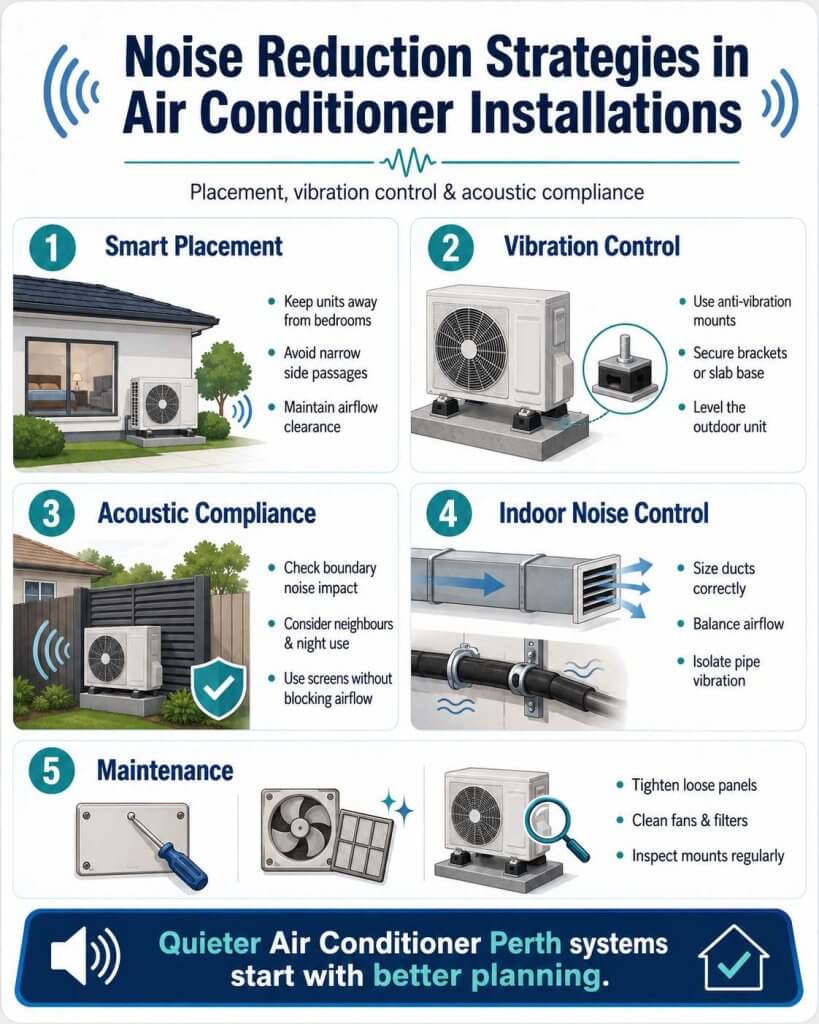
The outdoor condenser location is one of the most important decisions in a quiet installation. A unit placed in a narrow side passage, between walls, close to a bedroom window or near a neighbour’s boundary can create reflected sound. This can make the system seem louder than its listed sound rating.
Better placement usually considers:
- Distance from neighbouring bedrooms & outdoor living areas
- Avoidance of narrow spaces where sound can bounce between walls
- Suitable airflow clearance around the condenser
- Access for servicing without relocating the unit
- Separation from fences, windows, patios & hard reflective surfaces
WA installation guidance notes that the location of the air conditioner is a major factor in preventing intrusive noise, and units should be placed as far as possible from neighbours and noise-sensitive areas such as bedrooms and outdoor entertainment spaces.
2. Avoiding Sound Reflection
Sound reflection happens when noise bounces off walls, fences, eaves, concrete paths or metal structures. Even a relatively quiet system can become disruptive if installed in a tight or enclosed space.
Common reflection risks include:
- Side access lanes between two houses
- Courtyards with hard walls
- Units installed under eaves
- Condensers facing directly into neighbouring windows
- Commercial plant areas surrounded by concrete or metal surfaces
Where reflection is likely, the installer may need to reposition the unit, select a quieter model, use acoustic barriers or recommend a formal acoustic assessment.
3. Vibration Control at the Mounting Point
Noise is not only airborne. Vibration can move through brackets, walls, slabs, ceilings & roof structures. This is especially relevant for wall-mounted condensers, roof-mounted equipment, apartment installations & commercial HVAC systems.
Effective vibration control may include:
- Rubber isolation mounts
- Anti-vibration feet
- Correctly rated wall brackets
- Solid fixing points
- Avoiding lightweight wall sections where possible
- Ensuring pipes are clipped without transferring vibration into walls
- Checking that the condenser is level and stable
Poor vibration control can lead to humming, rattling or low-frequency noise inside the building. Over time, worn rubber mountings, dirty fan blades, cabinet rattles & compressor wear can also increase operating noise, which is why maintenance should be considered as part of the installation plan.
4. Selecting a Quieter System
Noise reduction starts with equipment selection. The lowest-cost system is not always the right choice if the property has close neighbours, narrow boundaries or night-time operating requirements.
When comparing systems, installers should review:
- Sound power level
- Indoor unit sound rating
- Outdoor unit sound rating
- Inverter operation
- Night mode or quiet mode settings
- Fan speed control
- Compressor design
- Suitability for the property layout
A quieter system may be required where the only available installation position is close to a boundary, bedroom, balcony or neighbouring residence.
5. Acoustic Barriers & Screening
Acoustic barriers can help reduce sound where relocation is not practical. However, a screen must be designed carefully because air conditioners require clear airflow. Blocking airflow can reduce efficiency, increase running costs & place strain on the system.
A suitable acoustic screen should:
- Reduce direct sound travel
- Allow manufacturer-required airflow clearance
- Avoid trapping heat around the condenser
- Be built from suitable dense materials
- Be positioned to protect the affected receiver, not just hide the unit visually
Fences, masonry walls & purpose-built acoustic panels may provide benefit in some cases, but the design should match the site conditions.
6. Pipework, Ducting & Indoor Noise Control
Indoor noise can come from the fan coil, return air path, ductwork, grilles or vibration through walls and ceilings. In ducted systems, noise control requires attention to air velocity, duct size, return air placement & grille selection.
Common indoor noise reduction measures include:
- Correctly sized ductwork
- Return air grilles positioned away from bedrooms where possible
- Flexible duct connections to reduce vibration transfer
- Secure duct supports
- Balanced airflow
- Appropriate fan speed settings
- Avoiding undersized outlets that create air rush noise
For commercial installations, acoustic treatment may be needed around plant rooms, ceiling voids, supply air ducts or return air paths.
7. Acoustic Compliance in Perth
Air conditioner noise is assessed based on the noise received at another premises, not only the sound rating printed on the product label. This means a compliant unit in one property may be unsuitable in another property if the location, boundary distance or surrounding surfaces increase the noise impact.
The Environmental Protection (Noise) Regulations 1997 are current WA legislation, with the consolidated version listed as current from 31 March 2025. Local governments are responsible for enforcing residential air conditioner noise limits at houses & units, and assigned levels vary by time of day.
The Town of Victoria Park also notes that noisy air conditioners are common in higher-density residential areas where units are often placed too close to neighbouring bedrooms.
8. Installation Planning for Residential Properties
Residential air conditioning requires careful siting because Perth homes often include narrow lots, outdoor entertaining areas, side setbacks & neighbouring bedrooms close to the boundary.
Before installation, we should assess:
- Where the neighbouring bedrooms are located
- Whether the unit will operate overnight
- The distance to the closest boundary
- Whether walls or fences will reflect sound
- Whether the outdoor unit can be placed at the rear of the property
- Whether a split system, ducted system or multi-head system is more suitable
A quiet installation is not only about comfort. It protects the homeowner from neighbour disputes, complaint investigations & potential relocation costs.
9. Installation Planning for Commercial Properties
Commercial air conditioning systems may include multiple condensers, rooftop packaged units, VRF/VRV systems, ducted systems & mechanical ventilation. Noise planning is important for offices, retail centres, warehouses, medical clinics, hospitality venues & mixed-use buildings.
Commercial considerations include:
- Plant location relative to neighbouring properties
- Rooftop vibration transfer
- Operating hours
- Staff & customer comfort
- Mechanical ventilation noise
- Council requirements
- Acoustic screening
- Maintenance access
Choosing an Air Conditioner Perth installer with experience in placement, system sizing & compliance planning can reduce long-term operational risk.
10. Maintenance as a Noise Reduction Strategy
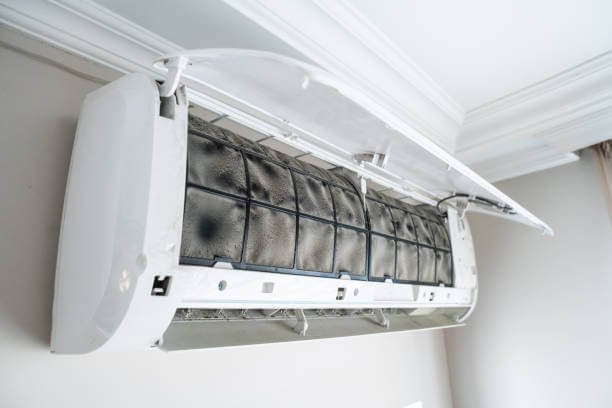
Even a well-installed system can become noisy if it is not maintained. Common causes include worn bearings, loose panels, dirty coils, bent fan blades, poor mounting, blocked filters & ageing rubber supports.
Maintenance should include:
- Cleaning filters & coils
- Checking fan operation
- Inspecting mounting points
- Tightening loose panels
- Checking pipe supports
- Reviewing unusual vibration or rattling
- Confirming the system is not overworking due to poor airflow
Noise that develops suddenly should be checked early, as it may indicate a mechanical fault or mounting issue.
Conclusion
Noise reduction in air conditioning is achieved through proper placement, vibration control, suitable equipment selection & acoustic compliance planning. A quiet system starts with the right installation decisions, including condenser location, mounting quality, airflow clearance, pipework support & consideration of neighbouring properties.
For residential, commercial & property management projects, our installation planning should prioritise comfort, system performance & compliance from the start. This helps reduce noise complaints, supports efficient operation & delivers a more practical long-term result.